
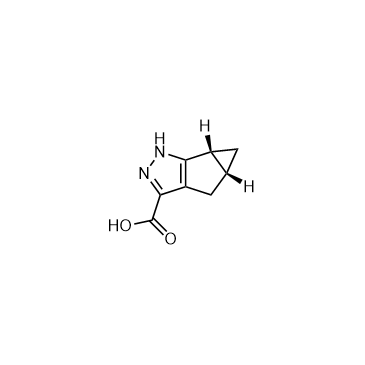
MK-1903
CAS No. : 1268882-43-4
| Size | Price | Stock |
|---|---|---|
| 5mg | $120 | In-stock |
| 10mg | $180 | In-stock |
| 25mg | $320 | In-stock |
| 50mg | $448 | In-stock |
| 100mg | $627 | In-stock |
| 200 mg | Get quote | |
| 500 mg | Get quote | |
| We match the lowest price on market. | ||
We offer a substantial discount on larger orders, please inquire via [email protected]
or Fax: (86)21-58955996
Inquiry for price and availability only. Please place your order via our email or fax.
| Cat. No. : | HY-107581 |
| M.Wt: | 164.16 |
| Formula: | C8H8N2O2 |
| Purity: | >98 % |
| Solubility: | DMSO : 125 mg/mL (ultrasonic) |
MK-1903 is an orally active full agonist of GPR109a/HCAR2, with an EC50 of 12.9 nM. MK-1903 activates antilipolytic and vasodilatory pathways, reduces plasma free fatty acid levels, and induces skin flushing. MK-1903 stimulates the expression of HCAR2 protein and regulates the inflammatory response of microglia. MK-1903 prevents the enhanced firing activity of spinal nociceptive neurons. MK-1903 triggers the release of MMP-9 and the formation of NET. MK-1903 can be used in the research of dyslipidemia and neuroinflammation-based central nervous system diseases[1][2][3].
In Vitro:MK-1903 (0.25-4 μM; 24 h) does not alter the viability of primary rat microglia, and can partially inhibit LPS (HY-D1056)-induced cytotoxicity in these cells[2].
MK-1903 (1 μM; 24 h) upregulates HCAR2 protein expression in primary rat microglia, and this effect is enhanced when the cells are subsequently treated with LPS[2].
MK-1903 (1 μM; 24 h) inhibits LPS-induced morphological activation of primary rat microglia, but induces an activated morphology in microglia when used alone[2].
MK-1903 (1 μM; 24 h) inhibits the LPS-induced upregulation of pro-inflammatory markers (COX-2, IL-1β) and restores the protein expression of the anti-inflammatory factor IL-10 in primary rat microglia[2].
MK-1903 (1 μM; 24 h) alone increases extracellular IL-10 levels in primary rat microglia, without altering the LPS-induced reduction in extracellular IL-10 levels in these cells[2].
MK-1903 (1 μM; 24 h) inhibits FKN-induced pro-inflammatory gene expression in mouse BV-2 microglial cells, and upregulates the expression of anti-inflammatory marker genes in these cells when applied alone[2].
MK-1903 (0.1-10 μM; 10 min) induces the release of MMP-9 from bovine polymorphonuclear leukocytes (PMN)[3].
MK-1903 (10 μM; 30 min) has no effect on the expression of CD11b or CD47 on the surface of bovine polymorphonuclear neutrophils (PMN)[3].
MK-1903 (1-10 μM; 60 min) induces the formation of neutrophil extracellular traps (NETs) in bovine polymorphonuclear neutrophils (PMNs), and the NETs colocalize with citrullinated histone H4[3].
MK-1903 (0.1-10 μM; 2 h) does not induce apoptosis or cell death in bovine polymorphonuclear neutrophils (PMN)[3].
In Vivo:MK-1903 (0.001-100 mg/kg; p.o.; single dose) produces a dose-dependent, sustained reduction in plasma free fatty acids in fasted male Sprague-Dawley rats[1].
MK-1903 (1-100 mg/kg; p.o.; single dose) induces a dose-dependent flushing response in anesthetized male C57BL/6 mice, with a ~30% peak increase in ear cutaneous blood flow at the 100 mg/kg oral dose[1].
MK-1903 (2.62 nmol/5 μL; spinal; single dose) prevents fractalkine-induced spinal nociceptive specific neuron hyperexcitability in healthy male Wistar rats, with no significant changes in NS neuron activity relative to baseline observed post-treatment[2].
Lorem ipsum dolor sit amet, consectetur adipisicing elit. Autem earum hic iste maiores, nam neque rem suscipit. Adipisci consequatur error exercitationem fugit ipsam optio qui, quibusdam repellendus sed vero! Debitis.
Inquiry Information- Product Name:
- MK-1903
- Cat. No.:
- HY-107581
- Quantity:
Your information is safe with us.